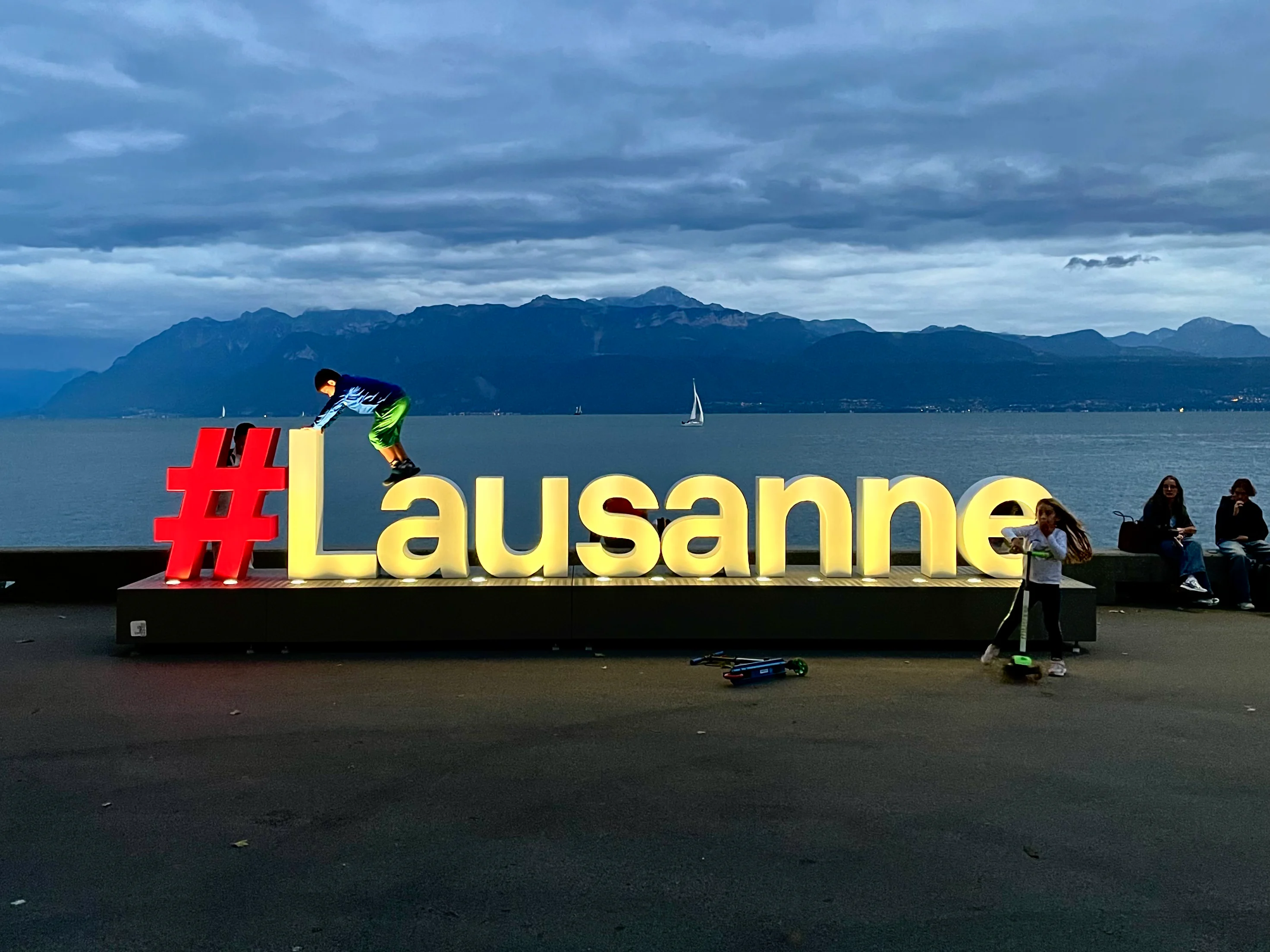
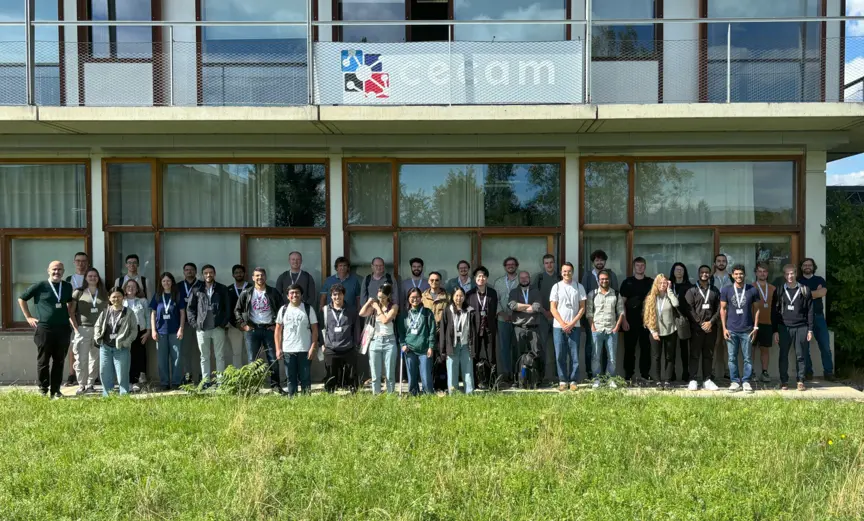
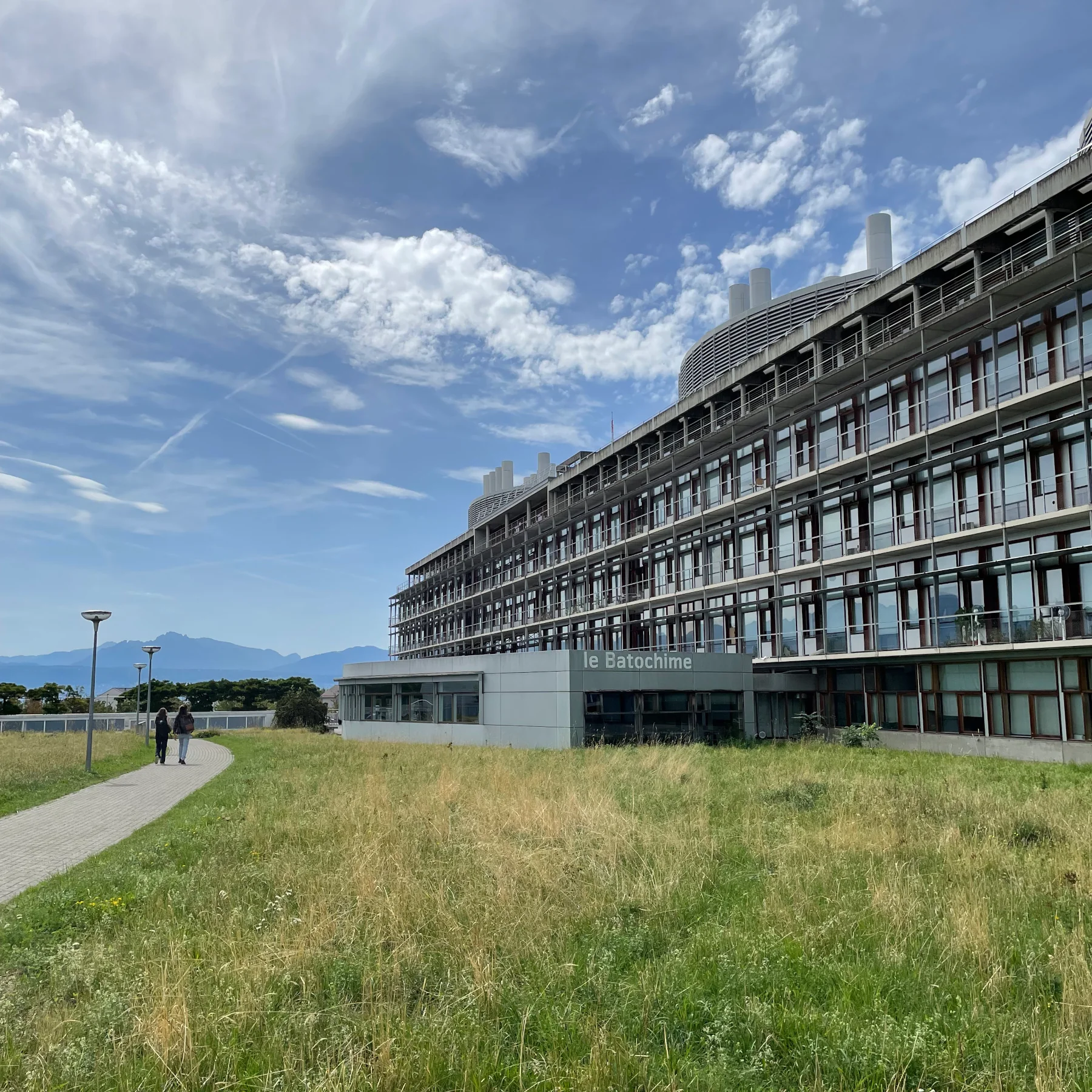
Matteo, Michal and Kateřina attended the flagship school “SpectroDynamics 2026: Connecting computational spectroscopic methods across the electromagnetic spectrum”. Hosted at EPFL CECAM-HQ, Lausanne, Switzerland, from September 7 to September 11, 2026, the five-day intensive event brought together computational researchers (and some experimentalists as well) from around the world to bridge gaps between different areas of molecular simulation and spectroscopy.
The school broke down the landscape of theoretical spectroscopy into three focus areas:
-
Exact Quantum Dynamics: How light interacts with small molecules when both electrons and nuclei must be treated as pure quantum particles. This approach is key for understanding ultrafast chemical reactions triggered by short X-ray and laser pulses. The lectures were given by Irene Burghardt, Shaul Mukamel, Stefano Cavaletto, and Jiří Vaníček.
-
Large-System & Vibrational Dynamics: How to simulate larger molecules in liquids or complex environments over longer timescales. Using methods like Ab Initio Molecular Dynamics (AIMD), Machine Learning potentials, and Path-Integral techniques, researchers can accurately model molecular motion and predict Infrared (IR), Raman, and interface-specific spectra. The lecturers were Tom Markland, Marie-Pierre Gaigeot, and Peter Hamm.
-
Electronic & Light-Coupled Dynamics: How electrons move when light hits a molecule, modeled using Time-Dependent Density Functional Theory (TDDFT). The course also covered exciting frontier topics where light and matter couple strongly inside optical cavities (Maxwell–TDDFT). Lectures were given by Hardy Gross, Michael Ruggenthaler, Norah Hoffmann, and Carlos Bustamante.
Each block of lectures was supported by an exercise session providing hands-on experience with various software packages and libraries. The last day, Shaul Mukamel held a perspective talk about the future of the field and together with other lecturers mentioned several specific problems that he foresee to be in spotlight in the years to come:
-
ab initio theory of phase transitions
-
protocols for exact spectroscopy simulations
-
ab initio electrochemistry
-
study of living cells in high temporal & spatial resolution
-
exploiting quantum theory of light for spectroscopy & chemistry
-
X-ray spectroscopy simulations
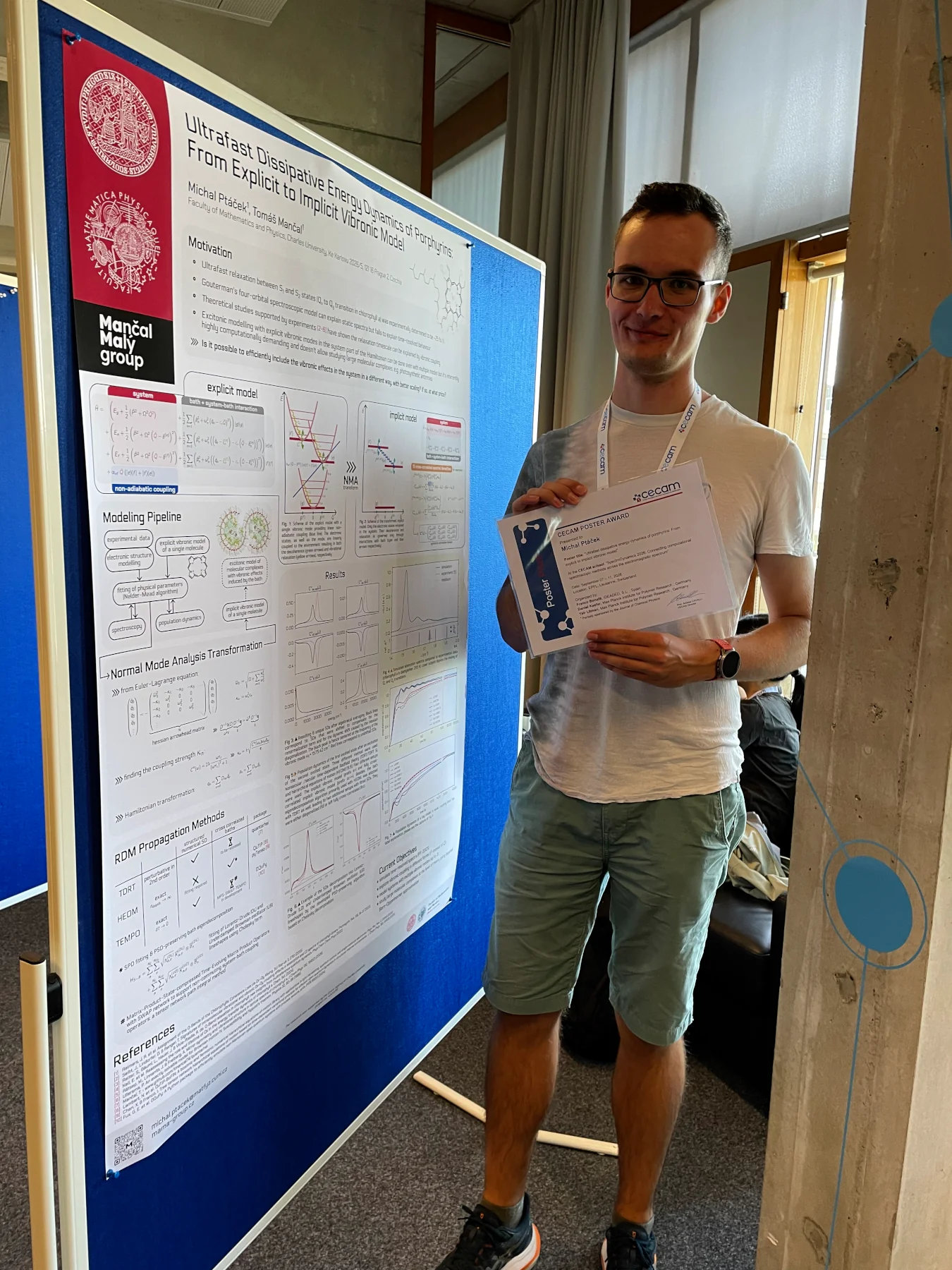
Michal was also awarded with a poster award for his poster titled “Ultrafast Dissipative Energy Transfer of Porphyrins: From Explicit to Implicit Vibronic Model”.
In the free time, we explored the natural and cultural (and culinary) beauties of the city and the surrounding area. Some of us even enjoyed the perfect water temperature of Lac Léman for swimming.